Posts

Who is he?

Image
Disclaimer- After briefing my view on her through the blog post " Who is She  ", this post is an attempt at my introspection on the “status” of the other  "50% " of the population. The basis of the write-up is what I have observed and felt. Is He a Ram or a Raavan? Is He a Krishna or a Kansa? Is He a Kalki or a Kali? Glory is his other name, or is it retirement time for this whimsical term? Since the inception of cultures and civilisations, males in our societies have been set to perform and tick specific criteria. The he-man of our society has since tried his best to live up to this reputation over time. However, nervousness is visible in him, primarily in the current times, when his defined roles are being questioned, and he himself conflicts with the hypothesis of malehood. These defined his-roles are formulated either through self-imposed judgments gathered from the experiences of others or through upbringing notions set in him, leading to specific ima...

Book Review- Reminders of Him by Colleen Hoover

Image
“Reminders of Him” by Colleen Hoover is a compelling read that delves into the profound sentiment, ' Hurt People Hurt People '. In her signature style, Hoover weaves a narrative filled with raw emotion and a unique issue that sets this book apart from her previous works. This time, it was the saga of a mother and a daughter who have been set apart since their birth. The story goes like - After serving five years in prison for a tragic mistake, Kenna Rowan returns to the town hoping to reunite with her four-year-old daughter. But the bridges Kenna burned are proving impossible to rebuild. Everyone in her daughter’s life is determined to shut Kenna out, no matter how hard she works to prove herself. Kenna must find a way to absolve the mistakes of her past to build a future out of hope and healing. What I love most about Hoover's books is her ability to create relatable characters. In Reminders of Him, I found myself deeply connected to Kenna and the emotional jo...

We are Tea Bags

Image
Disclaimer- The Tea Bag analogy is not my original idea; the interpretation is!! Imagine a tea bag in cold water; it floats, leaving the water unchanged. But when the same tea bag is placed in hot water, the water's colour transforms, and the tea from the bag infuses the water, altering it completely. The tea bag, a seemingly insignificant object, profoundly affects the water in the cup. After this process, it's no longer just water; it's tea. This analogy beautifully mirrors the transformative power we hold in our personal and professional lives. We, working people, are like tea bags in the professional world. We are like tea bags that leave behind a new colour and flavour after being in hot water. Similarly, in the professional world, what remains after the dramatic professional career of 60 years is the impact left in the department or organization at the time of separation or upon completion of the assignment. This impact could be in the form of a change in...

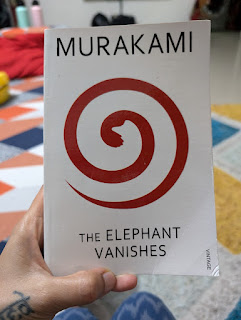
Book review - The Elephant Vanishes by Haruki Murakami

Image
Murakami's writing style resonates with me on a personal level. His sentences, though they may appear as a lost story or sometimes half-baked, hold a deeper meaning that transcends the ordinary. His stories often mirror my own philosophical musings, creating a sense of connection. 'The Elephant Vanishes' is a collection of short stories that delve into the mundane aspects of life, paradoxically through simple and unassuming writings. This simplicity, however, is what makes these stories so intriguing and thought-provoking. My favourite stories in the book are- “ The Little Green Monster ”. The story infers about the ugly parts of our personality that we are aware of and try to avoid continuously. But, in view of Murakami, this avoidance empowers the weakness. “ The Silence” . This story talks about how misunderstandings and misperceptions mould the personality and experience of the affected person, the overwhelming intensity of feelings from the past affecting t...

Book Review- 8 Rules of Love by Jay Shetty

Image
This book is my second read from Jay Shetty after  Think Like Monk  . As mentioned in the previous book's review, Jay Shetty has become the brand ambassador for bringing vedic wisdom into the modern lifestyle. Due to this amalgamation of varied spiritual topics he presents through his writings, he has become one of my faviourte writers. The simple writings with a direct, straightforward approach to the issues at hand make it seem that he is living his writings, as reflected in the practical guides/ suggestions approach in his chapters. 8 Rules of Love: How to Find It, Keep It, and Let It Go is not just a guide to finding love; it's a comprehensive exploration of the very essence of love. The book doesn't shy away from the issues we all face in our relationships, making it a relatable and understanding companion on our journey to love. Too often, we navigate the world of relationships with only romantic movies and pop culture as our guides. Inspired by Vedic wi...

Buddha second arrow- A lesson Learnt

Image
“In life, we can’t always control the first arrow. However, the second arrow is our reaction to the first. The second arrow is optional.” Picture yourself walking through a forest. Suddenly, you’re hit by an arrow. This first arrow may be a lousy or hurtful event ( like missing the train, burning food while cooking, spilling medicine, being late for work, etc .), which can cause pain or inconvenience to our inner peace for the moment or an hour or so, but it should get over. But, generally, the hurt of the first arrow isn’t over yet. There is a second arrow , which brings more pain and suffering. The second arrow represents our reaction to the wrong event—how we choose to respond emotionally. For example, we may forgive ourselves for burning the food (1st arrow) and later decide to cook another meal for the day or order from a restaurant. It can also happen that we may become disappointed (2nd arrow) with ourselves for burning the meal and, in reaction, become angry with o...

Book Review- The Tipping Point by Malcolm Gladwell

Image
, “Naam Bade aur darshan chote” (Review in one line!!) Well, I chose this book purely because it is an international bestseller and because I had a fair experience reading Malcolm Gladwell’s Outlier. However, this time it was a little disappointing to read from him. Throughout the book, I found baseless arguments and irrelevant examples trying to prove some or other points. “The tipping point” with a glowing matchstick ‘i’ in “po i nt” (book cover) poofed my interest with the 1st chapter titled Three Rules of Epidemics wherein the point was made that just as a single sick person can start an epidemic of the flu, so too can a small but precisely targeted push cause a fashion trend, the popularity of a new product, or a drop in the crime rate. The book is generally written from a socio-economic perspective and discusses how information spreads among people, why some ideas/products spread quickly and effectively, and whether there are kinds of people who are better at transm...